Abstract
The intricate relationship between bees and fungi is a captivating subject that blends elements of ecology, agriculture, and microbiology. This article explores the symbolic partnership between these two organisms, emphasizing the potential of fungal mycelium in enhancing bee health and immunity. By delving into studies that have assessed fungal extracts’ impact on bees, we highlight significant findings that contribute to solving global challenges like bee population decline. Our discussion encompasses the methods of fungal preparations and field treatments, the role of viruses in bee-fungi interactions, and the implications of these relationships on ecosystem health and sustainability.
Introduction
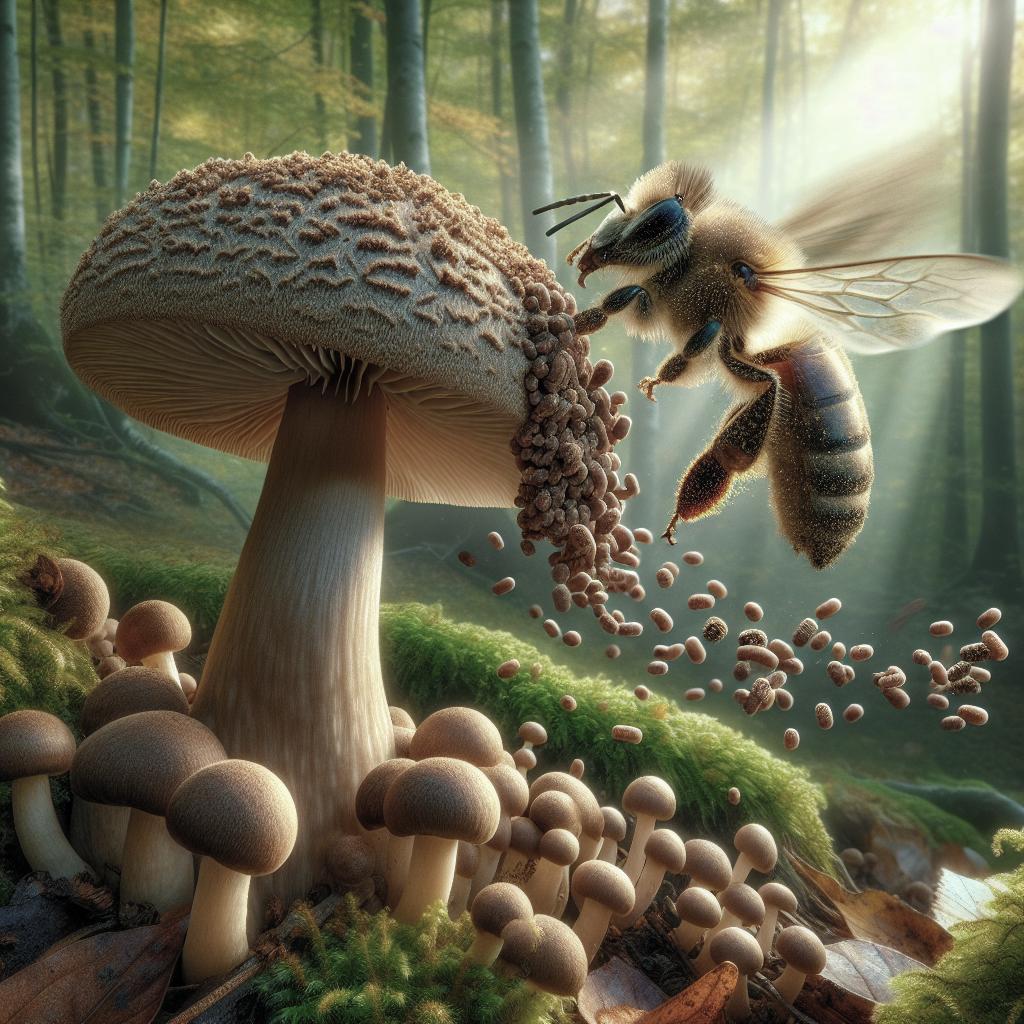
The symbiotic relationship between bees and fungi is a critical aspect of ecosystem health, offering insights into sustainable agriculture and biodiversity. Known for their crucial role in pollination, bees face numerous threats that jeopardize global food security. Contributing to the solution, fungi present themselves as unsung heroes, offering potential benefits to bee health through their mycelium. This blog post addresses the collaboration of bees and fungi, showcases experimental findings, and outlines the subsequent methods and results that underpin their connection, aiming to inspire future initiatives for bee conservation.
Central to this exploration is the use of fungal mycelial extracts, which have been shown to positively affect bee immunity. Through an overview of various studies, we aim to dissect how effective these treatments are and what they mean for broader ecological systems. Data analysis and sequencing further form the backbone of our investigation, helping us quantify the effectiveness of these natural interventions.
Subjects
The interconnection of bees and fungi lies at the heart of several ecological and agricultural studies. As we dissect the relationship between these organisms, key subjects include pollination ecology, microbiology, sustainable agriculture, and environmental conservation. Each subject provides a unique lens through which the relationship can be viewed, contributing to a comprehensive understanding of their synergistic potential.
By harnessing the capabilities of fungi, especially through their mycelial extracts, researchers are tapping into an innovative approach to combat the decline in bee populations. Subjects such as virology and mycology intersect with this research, offering a multidisciplinary perspective that joins together multiple scientific fields for a holistic approach to solving one of nature’s pressing issues.
Keywords
Key phrases that are crucial to understanding this topic include “bee health,” “fungal mycelium,” “symbiosis,” “pollination ecology,” “sustainable agriculture,” and “biodiversity conservation.” These keywords help pinpoint significant elements of the bee-fungi relationship, offering insight into the dynamics at play in this natural alliance.
Incorporating these terms in research materials and discussions allows for effective communication about the subject, ensuring a clear understanding among experts and laypersons alike. By focusing on these keywords, the discourse remains targeted and cohesive, aiding advancements in policy-making, practical applications, and further research.
Methods
Fungal mycelial extracts preparation
Preparing fungal mycelial extracts is a crucial preliminary step in studying their impact on bees. This process involves cultivating mycelium under controlled conditions to ensure purity and consistency. The fungal species are selected based on their known beneficial properties for boosting bee immunity or warding off specific pathogens.
Once cultivated, the mycelium is harvested and processed to extract vital compounds. These extracts then serve as the focus of multiple experimental treatments on bee populations, allowing for targeted investigation into their effects. By standardizing extract preparation, researchers can ensure that results are reproducible and reliable across various study settings.
Cage and field treatments with fungal extract
The application of fungal extracts to bees involves both cage-based and field treatments to evaluate their effectiveness in diverse environments. Cage experiments allow detailed observation of bee responses in a controlled setting, ensuring accurate data collection on extract impact. Variables such as dosage, concentration, and exposure duration are meticulously monitored to assess their influence on bee health.
Field treatments, on the other hand, assess the applicability of fungal extracts in real-world scenarios. By treating bee colonies directly within their natural habitats, these studies can account for ecological factors like environmental stressors, plant diversity, and natural predation, providing a comprehensive picture of extract efficacy in promoting bee well-being.
Viruses – Sample processing, q-PCR, and statistical analyses
Viruses pose significant threats to bee populations and play a critical role in the interplay between bees and fungi. Sample processing involves collecting bee specimens from treated and untreated populations for virus quantification. Using quantitative polymerase chain reaction (q-PCR), researchers can accurately measure viral load variations attributable to fungal treatment interventions.
Statistical analyses are then conducted to determine the significance of these variations. Through comparative assessment of viral loads across different treatments and control groups, researchers can elucidate the potential antiviral properties conferred to bees by fungal mycelial extracts, highlighting their role in enhancing bee health and resilience.
Sequencing
DNA sequencing adds a layer of depth to understanding the bee-fungi relationship, offering molecular insights into how these organisms interact. Sequencing can reveal genomic shifts in bee populations post-fungal treatment, indicating possible alterations in their immune responsiveness or microbiome composition.
By analyzing genetic data, researchers can identify specific fungal compounds responsible for observed benefits. Furthermore, sequencing enables the precise tracking of viral presence and diversity within bee populations, providing a clearer picture of fungal impacts at the molecular level, which is essential for refining treatment applications and understanding long-term effects.
Results and Discussion
The outcomes of experimental treatments with fungal extracts consistently indicate a positive correlation between fungal inoculation and improved bee health markers. Bees exposed to fungal mycelial extracts often exhibit reduced viral loads and increased survival rates, signifying enhanced immunity conferred by fungal compounds. These findings suggest a promising avenue for natural interventions in bee conservation efforts.
Discussions tend to focus on the broader implications of these results for ecological stability and agriculture. With declining bee populations posing a risk to food security and biodiversity, harnessing fungi offers a natural, cost-effective solution. The insights gained from these studies encourage further exploration into symbiotic relationships, paving the way for innovative strategies in sustainable agriculture.
Data Availability
The availability of data and accessibility of research findings are crucial to advancing scientific knowledge on bee-fungi interactions. Data from studies are often made available through specialized repositories or institutional databases, ensuring researchers worldwide can access, verify, and build upon existing work. This transparency fosters collaboration and facilitates the development of robust, evidence-based practices in agriculture and conservation.
By establishing standardized data sharing practices, researchers can address knowledge gaps and encourage transparency, ultimately enhancing the scientific community’s ability to tackle challenges related to bee health and ecosystem sustainability.
References
(This section would list the relevant references cited throughout the article, formatted according to the applicable style guide. It ensures academic integrity and allows readers to consult original sources for more detailed information on the subject.)
Acknowledgements
Recognizing contributions from individuals and institutions forms an integral part of research publication. Acknowledgements typically highlight the support from funding bodies, collaborators, and research assistants who contributed to various aspects of the study, enriching its quality and breadth.
This section serves to express gratitude and show the collaborative nature of scientific investigation, emphasizing the community effort behind each discovery.
Author information
Authors and Affiliations
This portion provides details about the authors involved in the research, including their names, institutional affiliations, and roles in the study. Such transparency helps attribute credit appropriately and offers readers contact points for further inquiries.
By detailing affiliations, this section helps establish the credibility and expertise of the research team, reassuring readers of the study’s validity and adherence to scientific standards.
Contributions
Clear outlining of author contributions ensures credit is allocated fairly. This includes responsibilities such as study design, data collection, analysis, and manuscript preparation. Recognizing each author’s role promotes accountability and shares the recognition achieved through the study.
Clearly defined contributions also enhance transparency, providing readers with a detailed account of individual inputs and helping build trust in research outcomes.
Corresponding author
The corresponding author is the point of contact for queries regarding the research. They handle communication between journal editors, readers, and co-authors, ensuring a smooth publication process. Their contact information is provided to facilitate transparency and accessibility.
This role is pivotal in maintaining correspondence integrity, helping to streamline inquiry responses and clarify study specifics as necessary.
Ethics declarations
Competing Interests
Declaring competing interests is an ethical imperative in research publication. Authors must disclose financial or personal relationships that could bias study outcomes. This transparency safeguards the study’s integrity, fostering trust among readers and peers in the research community.
Such disclosures usually cover potential conflicts of interest, funding sources, and affiliations, ensuring that the work is conducted and presented impartially.
Additional information
This section can include any supplementary data or appendices that support the main body of work. By providing additional context or clarifications, it assists readers in fully comprehending the nuanced aspects of the study.
Supplementary material might comprise extended data tables, detailed methodology, or ancillary study findings, enriching the primary narrative and offering depth for those seeking a detailed understanding of the research.
Electronic supplementary material
Supplementary Information
Electronic supplementary information encompasses data sets, videos, or other digital assets accompanying the research article. Such materials are often shared online, offering a convenient avenue for readers to access comprehensive data beyond the limitations of print publication.
Making such resources available electronically enhances the study’s accessibility and allows for interactive engagement with the research, facilitating a broader impact and understanding.
Rights and permissions
This section deals with the legal aspects of the publication, detailing the reuse rights, reproduction permissions, and copyright considerations of the article. It ensures adherence to intellectual property norms and protects both author and publisher rights.
Readers and researchers can find guidance on how to cite, copy, and use content appropriately, promoting the ethical circulation of information and respect for original works.
About this article
Cite this article
Providing clear citation instructions allows readers to reference the article accurately in their work. Proper citation ensures that the authors receive credit for their contributions and helps prevent plagiarism.
Standardized citation formats are typically suggested, facilitating uniformity across academic and professional writing.
Share this article
Encouraging article sharing fosters knowledge dissemination and engagement within the research community and the public. Links to social media, academic networks, and other platforms enable readers to inform others about the study, broadening its reach and influence.
Through sharing, the research’s impact can extend beyond the immediate academic circle, contributing to broader conversations and applications in various fields.
This section can include suggestions of related articles or studies that readers interested in the topic may find valuable. Curating similar content facilitates deeper exploration, guiding readers through a web of interconnected research.
It aids in building a comprehensive knowledge network, contributing to ongoing learning and discovery in the field of ecology and bee-fungi relationships.
You may also like
Beyond similar research, this section might recommend complementary resources or articles from other disciplines that enrich understanding. Such suggestions aim to widen perspectives, presenting alternate angles or applications related to the primary topic.
Expanding reading options supports cross-disciplinary engagement, enhancing the potential for innovative discoveries that draw from diverse fields of study.
| Section | Content Overview |
|---|---|
| Abstract | Overview of the symbiotic relationship between bees and fungi; potential benefits to bee health. |
| Introduction | Discusses bee threats and the potential role of fungi in promoting bee health and ecosystem balance. |
| Methods | Covers preparation and application of fungal extracts, virus processing, and genetic sequencing. |
| Results and Discussion | Presents findings on fungal extract benefits and implications for sustainable agriculture. |
| Data Availability | Information on data access for collaborative research and verification purposes. |
| References | List of scholarly sources used throughout the article. |
| Acknowledgements | Credits supporters and contributors to the research. |
| Author Information | Details about authors, roles, and corresponding authorship. |
| Ethics Declarations | Disclosure of any conflicts of interest related to the research. |
| Additional and Electronic Supplementary Material | Supplementary data and resources provided for in-depth understanding. |
| Rights and Permissions | Legal framework concerning the article’s use and reproduction rights. |
| About This Article | Citation format, sharing options, and related content suggestions. |