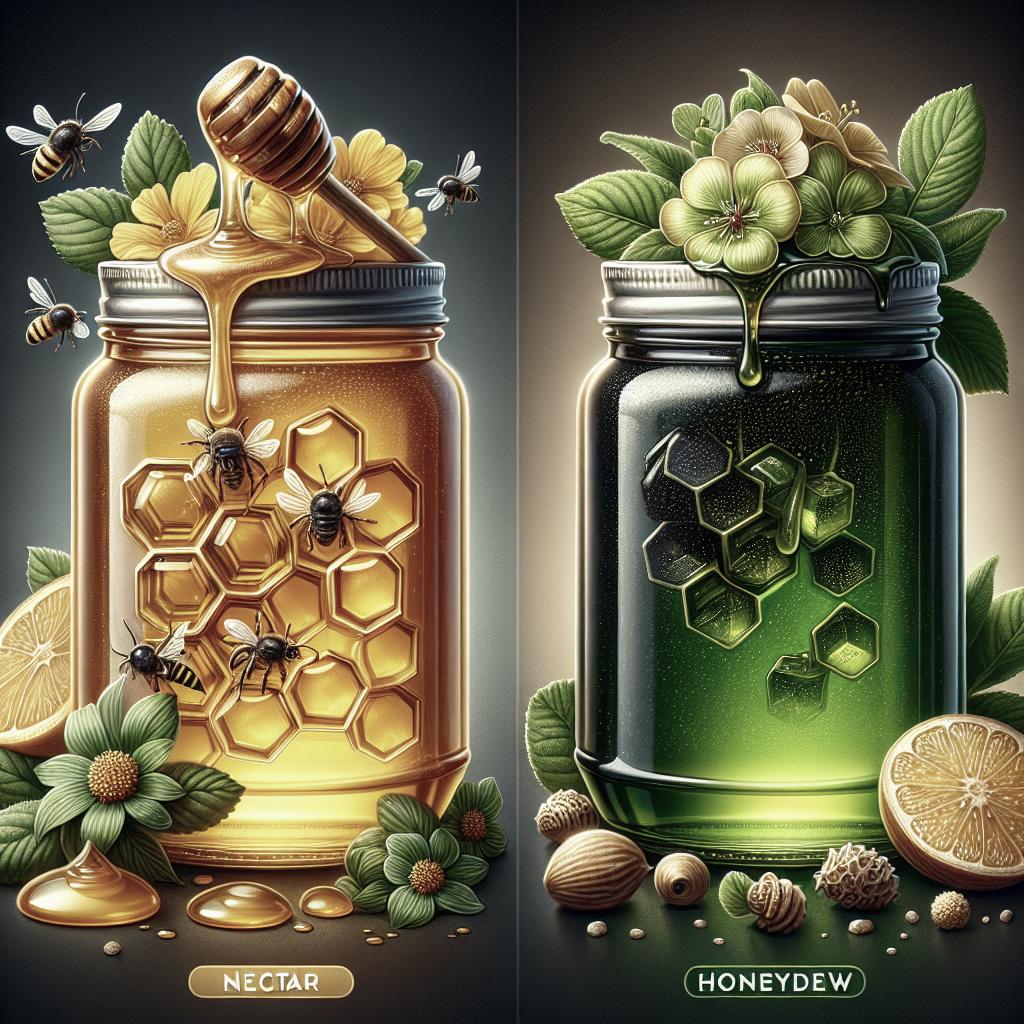
Understanding the Differences Between Nectar and Honeydew Honey
Honey enthusiasts often savor the distinct flavors and health benefits of various types of honey, with nectar honey and honeydew honey being two of the most fascinating varieties. While both derive from the hardworking bees we all depend on, their origins and characteristics differ significantly. In this article, we’ll delve into the relationship between bees and aphids, explore why honeydew honey is cherished as a premium product, ask whether honeydew honey might be healthier, and help you decide which type suits your palate and needs. Finally, we’ll summarize these key differences in a concise table, ensuring you walk away with a comprehensive understanding of these remarkable honeys. Join us on this sweet exploration into the world of honey!
Because it Takes Two to Tango – Aphids and Bees
The creation of honeydew honey starts with an intriguing partnership between aphids and bees. Aphids, small sap-sucking insects, feed on the sap of plants, excreting a sugary liquid known as honeydew. Unlike nectar obtained directly from flowers, honeydew is a byproduct of aphid digestion. Bees gather this honeydew, using it to create honeydew honey instead of the more common nectar honey.
This collaboration highlights the complex roles bees play in our ecosystem. While nectar honey is predominantly floral, the source of honeydew creates unique characteristics in flavor and content. Moreover, the environmental conditions that support aphid populations and the health of the host plants further enhance the nuances found in honeydew honey. Understanding this symbiotic relationship helps appreciate both the natural processes at play and the variety of honey we enjoy.
Honeydew Honey – Champagne Among Honeys
Often referred to as the “champagne of honeys,” honeydew honey is celebrated for its rich, robust taste and darker hue. Unlike nectar honey, which can be light and floral, honeydew honey offers more complex and pronounced flavors, often with woody or malty notes. These characteristics make it a favorite among connoisseurs seeking a distinctive and memorable honey experience.
The rarity and unique production process of honeydew honey contribute to its premium reputation. Since it relies on specific environmental conditions and aphid activity, honeydew honey can be more challenging to produce on a large scale, making it a sought-after delicacy. When available, its intense flavors make it perfect for pairing with cheese, using in gourmet recipes, or simply enjoying on its own.
Is Honeydew Honey Healthier?
The question of whether honeydew honey is healthier than nectar honey is intriguing. Honeydew honey is known for having higher levels of antioxidants, minerals, and amino acids compared to its nectar counterpart. These components are beneficial for the immune system, potentially making honeydew honey a healthier choice for those seeking additional nutritional benefits.
However, it’s essential to remember that both honey types offer health benefits, including antibacterial properties and soothing effects on sore throats. Choosing honeydew honey might provide specific advantages due to its unique composition, but nectar honey, with its wide range of floral sources, also presents varied and valuable nutrients. Ultimately, the health benefits are contingent on individual dietary needs and preferences.
Nectar or Honeydew Honey? Which One to Choose?
Deciding between nectar and honeydew honey often comes down to personal taste and usage preference. If you prefer lighter, more floral flavors, nectar honey might be the right choice for you. It’s ideal for sweetening tea, drizzling over yogurt or incorporating into baking where the gentle flavors can shine through.
Conversely, if your palate leans toward bold, complex tastes, honeydew honey offers a flavorful alternative. Its intensity can enhance savory dishes or stand out as a star ingredient in various culinary applications. Consider the flavor profiles and nutritional values of each type to determine which complements your lifestyle and culinary endeavors best.
Leave a Comment
We would love to hear your thoughts and experiences with nectar and honeydew honey! Whether you have a favorite type, recipe ideas, or simply want to share your honey journey, feel free to leave a comment below. Your input enriches our community and adds flavor to our discussion. Let’s keep the conversation as sweet as the honey we enjoy!
Final Thoughts
| Aspect | Nectar Honey | Honeydew Honey |
|---|---|---|
| Source | Floral nectar | Aphid secretions (honeydew) |
| Flavor | Light, floral | Rich, woody/malty |
| Color | Lighter | Darker |
| Health Benefits | Variety of micronutrients | Higher antioxidants, amino acids, minerals |
| Rarity | More common | Less common, premium |