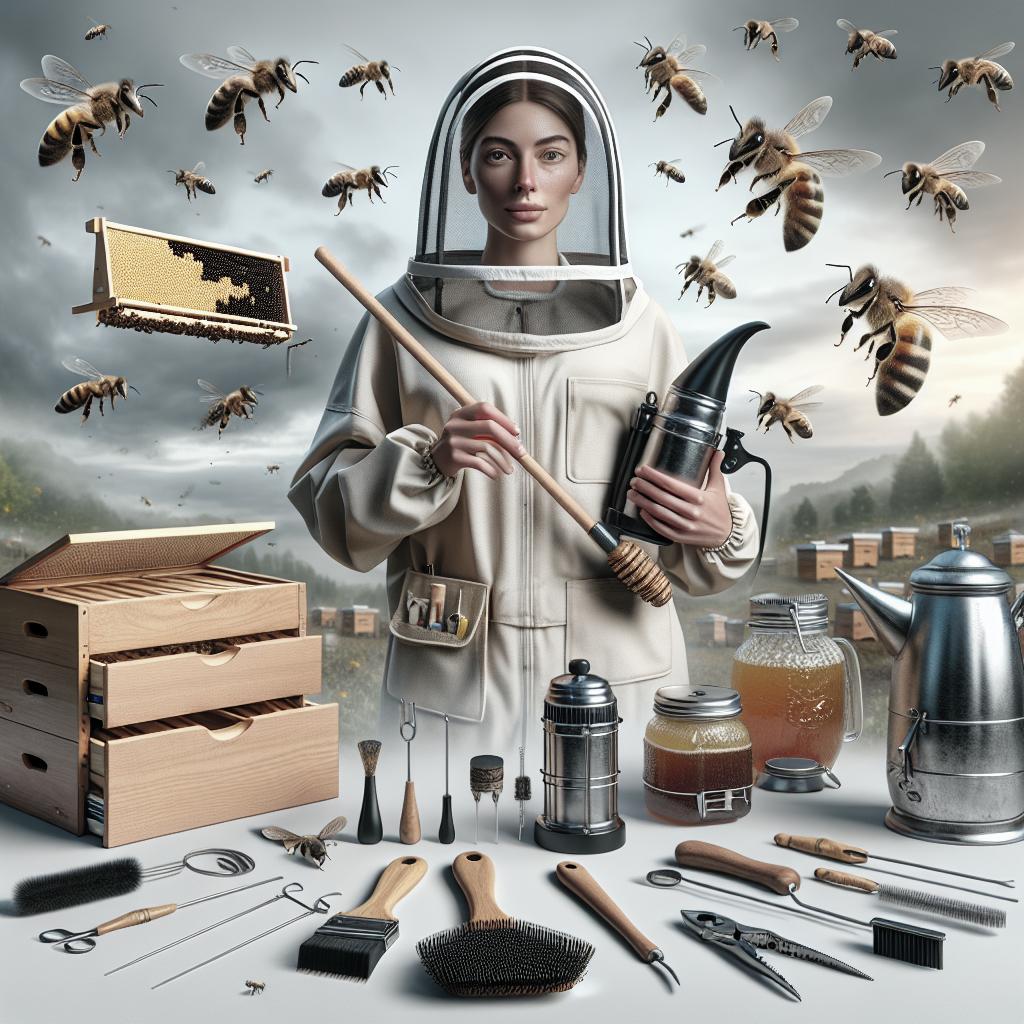
How Bees Find Food Sources
Bees are fascinating creatures that play a vital role in our ecosystem, primarily through pollination. To fulfill this role, they need to locate and gather food efficiently. This blog post delves into how bees find food sources, covering various aspects such as the diverse roles within the hive, their unique senses, and communication methods. We’ll explore their vision, pheromones, and the iconic dances they perform. Additionally, we discuss how bees interact with humans to support their vital pollinating activities. By understanding these incredible processes, we can appreciate the complexity and intelligence of bees and the essential contributions they make to nature.
Bees’ Roles in the Hive
Queen Bees
The queen bee is central to a hive’s survival and functionality. While her primary role is reproduction, laying thousands of eggs, she does not participate in foraging for food herself. Instead, her presence and pheromone signals help coordinatethe hive’s activities, including food collection strategies.
Drone Bees
Drone bees are the male members of the hive with a singular focus: reproduction. They do not participate in gathering food or maintaining the hive. Instead, their role is to mate with a queen from another hive, which ensures genetic diversity within the bee population. Hence, drones leave the task of food collection to the worker bees.
Worker Bees
Worker bees are females that take on various tasks depending on their age and the needs of the hive. One of their critical roles is foraging for nectar and pollen, essential food sources for the hive. They employ intricate communication methods and senses to locate these resources efficiently.
How Bees See Flowers
Touch
Bees use their sense of touch to evaluate flowers and their potential as food sources. Through tiny hairs on their bodies, they can feel the texture and shape of petals, helping them identify flowers even in less ideal light conditions.
Dance Language
Bees have developed sophisticated dance languages to communicate information about food sources to one another.
Round Dance
The round dance is used by bees to convey information about food sources that are nearby. A bee will move in a circular pattern, indicating that food is within roughly 50 meters, prompting other bees to search the immediate vicinity for nectar-rich flowers.
Waggle Dance
The waggle dance is more complex, used for communicating the direction and distance to food sources located further away. The angle and duration of the dance relative to the hive and the sun convey precise navigating instructions to other bees.
Odor Cues or Pheromones
Bees rely heavily on their sense of smell to locate flowers. They can detect a variety of floral scents and pheromones emitted by other bees. Pheromones are also used within the hive to maintain social structure and organization, signaling the presence of food to foragers.
Vibration and Sound
Vibration and sound play a lesser-known role in how bees assess food sources. Through the vibrations generated by their wings and body movements, bees can communicate and fine-tune their understanding of food resource locations. These vibrations can also affect flower receptivity and nectar production.
Talking to People
Human interaction with bees has become increasingly important, especially in the context of agriculture and food production. Farmers and beekeepers collaborate to enhance pollination efficiency, ensuring crops receive adequate bee visitation for optimal yields.
Moreover, technologies such as RFID tagging and AI-powered monitoring systems are being developed to track bee movements and improve our understanding of their behavior. These insights help us create better environments for bees, contributing to their health and productivity, and by extension, our food security.
Public awareness initiatives and educational programs aim to inform people about the importance of bees and how to protect them. Simple actions, like planting bee-friendly flowers and reducing pesticide use, can help sustain bee populations and their ability to find food sources efficiently.
Final Thoughts
The intricate methods bees use to find food sources highlight their crucial role within ecosystems. From their specialized dances to their remarkable senses and communication abilities, bees’ complex behaviors underscore the importance of preserving these vital pollinators. Understanding these processes not only deepens our appreciation but also guides our efforts in supporting bee populations.
| Bee Role | Key Functions |
|---|---|
| Queen Bee | Lays eggs, coordinates hive activities through pheromones |
| Drone Bee | Focuses on reproduction, does not forage for food |
| Worker Bee | Forages for nectar and pollen, communicates food locations |
| Sense/Method | Description |
| Touch | Evaluates flower texture and shape |
| Dance Language | Conveys food source location and distance |
| Odor Cues | Detects floral scents and pheromones |
| Vibration and Sound | Assesses and communicates food source details |
Submit a Comment Cancel reply