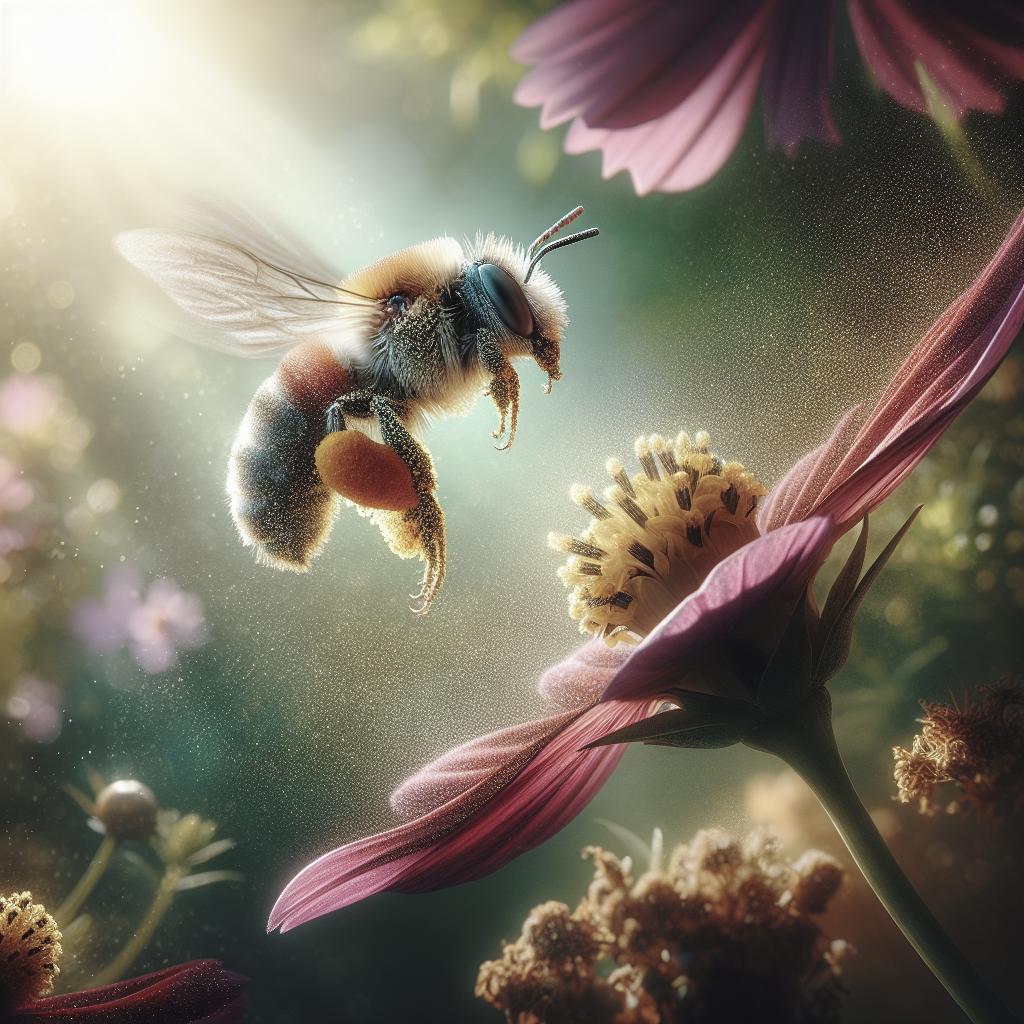
The Role of Solitary Bees in Pollination
When it comes to bees, our minds often drift to thoughts of buzzing honey bees or the charming character of bumble bees laboriously flying from flower to flower. However, the unsung heroes of pollination, solitary bees, play an equally critical role in maintaining ecological balance and boosting agricultural output. This blog post delves deep into the world of solitary bees, highlighting their unique characteristics, their indispensable contribution to ecosystems, and how enthusiasts can identify and support these vital insects. Immerse yourself in the rich tapestry of solitary bee life and discover why their role in pollination is anything but solitary.
When most people think about bees, they think about sociable honey bees or large, furry bumble bees.
The collective consciousness often associates the term “bee” with images of buzzing hives filled with sociable honey bees or the distinctive stripey bumble bees. Honey bees are celebrated for their tireless work ethic and their production of honey, serving as the backbone of apiculture and playing a significant role in global agriculture. Bumble bees, with their robust bodies and furry coats, are known for their ability to pollinate in cooler temperatures. Both bee types are undeniably important, but the less visible solitary bees deserve just as much applause.
Contrary to the communal nature of honey and bumble bees, solitary bees exist mostly as lone rangers in the bee world. With around 90% of known bee species being solitary, they quietly execute the essential task of pollination without the social structure of hives. Their unspectacular and unobtrusive lifestyle may have kept them out of the limelight, but it is precisely this solitary nature that allows them to efficiently contribute to biodiversity and plant reproduction.
What’s so special about solitary bees?
Solitary bees encompass a myriad of special qualities that make them integral to the environment. Unlike their more sociable counterparts, these bees do not produce honey, nor do they live in large colonies. Instead, each female is responsible for building her own nest and providing for her offspring. This non-reliance on colonies grants solitary bees the agility to adapt to various ecological niches, filling critical roles that social bees cannot.
Perhaps one of the most remarkable features of solitary bees is their efficiency in pollination. Many solitary bee species exhibit a technique known as “buzz pollination,” where they vibrate their bodies to release pollen from flowers, a process crucial for the pollination of certain crops like tomatoes and blueberries. It is estimated that a single solitary bee can do the work of 120 honey bees over the same period, solidifying their status as top-tier pollinators despite their cryptic nature.
Good to know
Familiarizing oneself with the traits and habits of solitary bees can enrich our understanding and appreciation of these diligent insects. Most solitary bees have relatively short life spans, emerging in the spring or summer to take advantage of blooming plants. They possess varying body sizes and colors depending on their species, often leading to their misidentification as wasps or other insects.
Solitary bees are non-aggressive and rarely sting, rendering them harmless to humans and pets. Their nesting behavior is fascinating, as they choose ground burrows, hollow stems, or wood cavities to lay their eggs. Female bees efficiently provision their nests with pollen and nectar, creating a series of compartments each with an egg. This innovative design ensures the next generation continues the vital work of pollination.
Solitary bees in the ecosystem
Solitary bees serve as pivotal players in maintaining flourishing ecosystems. Their unparalleled pollination skills significantly contribute to the reproduction of wild plants and crops, helping to sustain food webs and biodiversity. By facilitating the transfer of genetic material within and between plant populations, they bolster the resilience of various habitats against environmental changes.
The presence of solitary bees in an ecosystem can be indicative of its health. These bees enhance genetic diversity among plant species, which in turn supports a variety of other wildlife that rely on plants for food and shelter. As natural habitats face threats from urbanization and climate change, encouraging solitary bee populations becomes increasingly essential for preserving ecological integrity.
What happens in the bee house?
A bee house, or bee hotel, is an anthropogenic creation designed to mimic natural nesting sites of solitary bees. These structures offer essential habitat in urban or otherwise unsupportive environments, providing a safe haven for lodging and reproduction. The bee house enlists the help of natural materials like wood and bamboo to give bees an ideal nesting option away from harsh environmental elements.
Residing in bee houses, solitary bees can thrive without the encumbrance of competition for nesting sites, anchoring their role in local ecosystems. These residences grant budding bee enthusiasts an unobtrusive window into the world of solitary bees, allowing for close observation and fostering an appreciation for their persistent endeavors in pollination. Proper maintenance of bee houses involves cleaning and replacing materials as necessary to prevent disease and parasitic infestations.
If you see solitary bees around your bee house, why not keep a record of:
Documenting solitary bee activity near a bee house can be an enlightening experience and contribute to broader ecological awareness. Keeping track of the types and numbers of solitary bee visitors can provide invaluable data for understanding the roles these insects play in pollinating nearby flora. Enthusiasts can collaborate with citizen science initiatives, supplying information on bee populations and distribution patterns.
When observing solitary bees, note the diversity in their behavior and life cycles. Pay attention to nesting habits and the variety of flowers utilized for foraging. This documentation can reveal the intricate dependencies solitary bees have on their environment and serve as a platform for educating others on the significance of conserving these silent pollinators.
How to identify solitary bees.
Identifying solitary bees requires a keen eye and some basic knowledge of their distinguishing features. One can start by observing their behavioral patterns. Solitary bees are less likely to be seen in large groups and are often spotted working diligently in isolated environments.
Physically, solitary bees vary considerably in appearance, yet they often have more muted colors compared to honey or bumble bees. While some sport metallic sheens, others may appear nondescript. With further observation, enthusiasts can develop the ability to identify specific species through subtle differences in their size, hair patterns, and even the shape of their wings.
Lessons Learned
| Topic | Key Point | Takeaway |
|---|---|---|
| Common perceptions about bees | Bees are often thought of as social honey or bumble bees. | Solitary bees also play a crucial role in pollination. |
| What’s special about solitary bees? | They are efficient pollinators and don’t live in colonies. | They adapt well to diverse environments and have unique pollination techniques. |
| Facts about solitary bees | Short life spans, varied appearances, and non-aggressive nature. | Understanding and protecting them benefits ecosystems. |
| Solitary bees’ ecological role | Enhance genetic diversity and ecosystem health. | Supporting them is key to maintaining biodiversity. |
| Bee houses | Provide nesting sites for solitary bees. | Enable close observation and habitat support. |
| Documenting and identifying solitary bees | Record behaviors, features, and visitation patterns. | Contributes to ecological understanding and conservation efforts. |