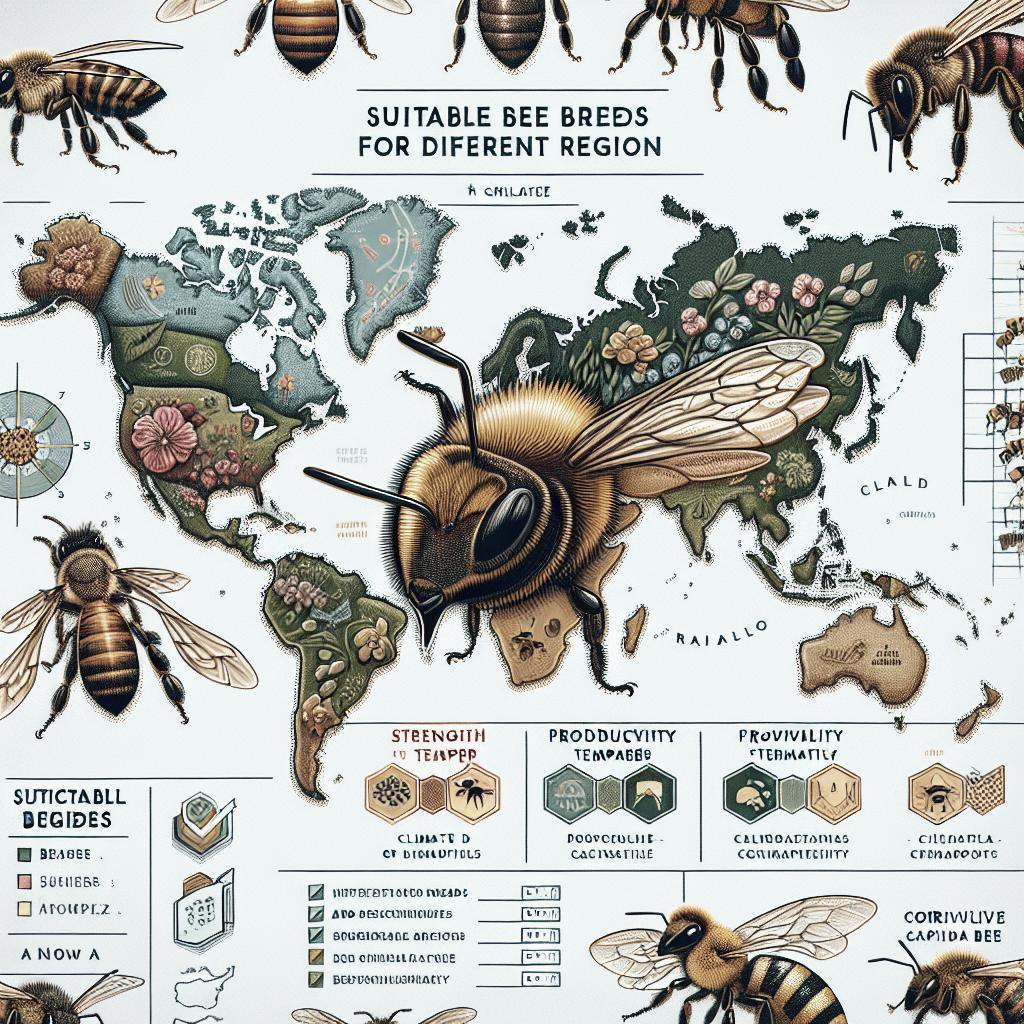
How to Select the Right Bee Breed for Your Region
When it comes to beekeeping, choosing the right bee breed is paramount. Different breeds come with unique strengths and challenges, and their adaptability to regional climates and conditions can impact the success of your beekeeping endeavor. This comprehensive guide will walk you through several popular honey bee breeds, highlighting each breed’s characteristics and benefits. We’ll cover honey bees, including Carniolan, OHB Saskatraz, Italian, Russian-hybrid, and Purebred Russian bees. Additionally, we’ll delve into Southern Italian and Cordovan bees. Finally, the OHB Golden West honey bees will be discussed. We answer common questions on bee breeding and offer insight into the importance of genetic diversity to maintain healthy populations. Whether you’re a novice or an experienced beekeeper, this article will equip you with the knowledge necessary to start your beekeeping journey confidently.
1. Carniolan Honey Bees
Carniolan honey bees, native to Slovenia and parts of Croatia, Austria, and Bosnia, are among the most favored bee breeds due to their impressive adaptability and gentle temperament. They are known for their minimal swarming tendencies, making them ideal for both beginner and professional beekeepers. Adapted to cooler climates, Carniolans can thrive in regions where temperatures might challenge other breeds.
Strengths of OHB’s Carniolan Package Bees
OHB’s Carniolan package bees are particularly known for their rapid spring build-up. This early fast growth gives beekeepers a head start in honey production. Additionally, they are prodigious honey producers and excellent pollinators. Their ability to adjust brood production based on environmental conditions also allows for resource-efficient management, reducing the need for excessive feeding.
2. OHB Saskatraz Honey Bees
Saskatraz honey bees are a result of careful breeding programs in Canada designed to emphasize both honey production and resistance to common bee diseases. These bees combine the best traits of various bees to withstand challenging environments, particularly cold climates.
Strengths of OHB’s Saskatraz Package Bees
The OHB Saskatraz package bees are appreciated for their resilience against mites, which are a significant threat to bee populations. Their selective breeding also focuses on ensuring good honey production capacity and overwintering abilities. The Saskatraz’s balanced temperament makes them manageable, even for those new to beekeeping.
3. Italian Honey Bees
Italian honey bees are the most popular breed among beekeepers worldwide. Originating from the Italian Peninsula, they are noted for their yellow-banded bodies and exceptional foraging capabilities. They are particularly well-suited for warmer climates due to their origin.
Strengths of OHB’s Italian Package Bees
OHB’s Italian bees are famed for their prolific honey production and large brood cycles. With their strong work ethic, they thrive in diverse floral environments. Their docile nature and strong resistance to disease make them a favorite, as they typically require less intervention from beekeepers.
4. Russian-Hybrid Honey Bees
Russian-hybrid honey bees have gained recognition for their durability and disease resistance, particularly against the Varroa mite. These bees are a hybridization of Russian bees, valued for their ability to thrive in the harsh climates of Eastern Russia.
Strengths of Our Russian-Hybrid Honey Bees
The primary strength of our Russian-hybrid bees lies in their enhanced brood hygiene, which is vital for colony health. Their growth adjusts according to the nectar flow, allowing them to maintain resource balance and minimize swarming. This adaptability makes them a good fit for regions with fluctuating environmental conditions.
5. Purebred Russian Honey Bees
Purebred Russian honey bees are revered for their hardiness and resilience in highly varied climates. They are an excellent choice for beekeepers looking to maintain robust colonies throughout the seasons, with their origins providing them an evolutionary advantage.
Strengths of Our Purebred Russian Package Bees
Known for their pest resistance, purebred Russian bees are less reliant on chemical treatments which is a plus for sustainable beekeeping. Their efficient overwintering and frugal honey consumption also make them an economic option, making them an ideal candidate for cold-climate apiculture.
6. Southern Italian Honey Bees
The Southern Italian honey bees are closely related to their Northern counterparts but have traits that make them more suited to the warmer and more humid climates of Southern Europe. These bees harness floral resources with great efficiency, especially during prolonged warm periods.
Strengths of Our Southern Italian Package Bees
Our Southern Italian bees exhibit strong resistance to local pests and diseases common in warmer regions. They are known for their excellent honey-gathering skills and balance of brood production, which ensures the consistent development of healthy colonies. Their efficiency in warmer climates can be predominantly attributed to the minimized stress levels experienced during hot seasons.
7. Cordovan Honey Bees (Apis Mellifera Cordovana)
Cordovan honey bees, scientifically distinct due to their unique genetic markers, are primarily for their striking appearance, characterized by lighter-colored bodies. These bees also possess many of the favorable traits found in Italian honey bees, including a productive and calmly inclined nature.
The Cordovan variant is particularly useful in backyard honey production and small-scale farming due to their aesthetics and agreeable temperament. While they engage actively in pollen collection, beekeepers appreciate their reduced aggressive behavior, making hive management more straightforward and pleasant.
8. OHB Golden West Honey Bees
The OHB Golden West honey bees are a distinctive breed developed for outstanding adaptability and sanitation behavior. They excel in regions with varying temperatures, maintaining their productivity through seasonal changes.
The primary characteristic of these bees is their advanced hygienic behavior, crucial for disease resistance and the welfare of the hive. Furthermore, they are responsive to natural fluctuations in nectar flow thus reducing the risk of swarming. These qualities make them a reliable choice for any beekeeper targeting high honey yields and a sustainable apiary environment.
Frequently Asked Questions
What is the significance of honey bee breeding in maintaining healthy bee populations?
Bee breeding is vital in improving traits such as disease resistance, productivity, and adaptability to environmental stressors. Selective breeding aids in preserving and enhancing desirable qualities that lead to robust bee populations, crucial for environmental sustainability and agricultural productivity.
How do Italian bees tend to behave differently from other bee strains?
Italian bees are known for their gentle demeanor and high productivity in honey production. Compared to other strains, they tend to have larger broods and are less likely to swarm, making them more manageable for beekeepers.
In what ways do Russian bees tend to show resistance to pests?
Russian bees exhibit natural resistance to pests, especially Varroa destructor mites, thanks to their grooming behaviors and small brood size. Their unique ability to disrupt mite reproductive cycles plays a crucial role in maintaining colony health without excessive reliance on chemical treatments.
Can you tell me about the adaptability of the Italian honey bee to different climates?
Italian honey bees adapt well to warm temperate climates, thriving in regions where floral resources are abundant year-round. This adaptability also extends to their ability to adjust brood production based on resource availability, ensuring a stable and healthy population.
What challenges do Africanized honey bees pose to local honey bee populations?
Africanized honey bees present challenges due to their aggressive behavior and tendency to dominate resources. Their presence can disrupt local ecosystems and pose a threat to more docile bees, necessitating effective management strategies to control their spread.
How do German bees contribute to the diversity of European honey bees?
German bees, particularly the Dark Bee strains, contribute to genetic diversity owing to their variation in adaptability and resilience to certain environmental conditions. Their unique genetic traits serve as a vital resource in breeding programs aimed at enhancing overall bee health across Europe.
What role does the Buckfast bee play in honey bee breeding efforts?
Buckfast bees, developed by Brother Adam, are known for their cross-bred vigor, resulting in superior disease resistance and productivity. They play an instrumental role in breeding efforts focused on consolidating positive traits from multiple strains, thereby promoting sustainable and resilient bee populations.
How does the temperament of Italian bees compare with that of Russian bees?
Italian bees, often described as docile, contrast with the sometimes more defensive Russian bees. While Italians are easy to handle, making them suitable for hobbyists, Russian bees require experienced management due to their more protective nature over their hives.
What strategies are used to prevent the spread of Africanized honey bees into honey bee colonies?
To prevent the spread of Africanized bees, strategies include maintaining well-managed apiaries, using European bee populations with accomplished traits, and applying genetic testing to ensure pure breed maintenance. Knowledge distribution and education about handling emergencies effectively also play significant preventative roles.
Why is genetic diversity important in honey bee populations?
Genetic diversity is critical as it contributes to overall colony health, resilience, and adaptability. Diverse genetics help bees respond to environmental changes, resist diseases, and maintain productivity. Therefore, preserving a wide range of genetic material is vital for beekeeping sustainability.
Start Your Beekeeping Journey with Confidence!
Choosing the right bee breed is essential in establishing a thriving and successful apiary. Each bee breed discussed offers unique characteristics and advantages tailored to a variety of climates and beekeeping goals. By understanding the specific traits and strengths of breeds like the Carniolan, Saskatraz, and Italian honey bees, among others, beekeepers can make informed decisions tailored to their region and objectives. This knowledge is crucial for ensuring the health and sustainability of bee populations, a vital component of environmental ecology and the agricultural sector.
| Bee Breed | Unique Traits | Ideal Conditions |
|---|---|---|
| Carniolan Honey Bees | Gentle temperament, minimal swarming | Cooler climates |
| OHB Saskatraz Honey Bees | Disease resistance, good honey production | Adaptive to challenging environments |
| Italian Honey Bees | Prolific honey production, docile | Warm climates |
| Russian-Hybrid Honey Bees | Pest resistance, adaptable brood cycles | Fluctuating environmental conditions |
| Purebred Russian Honey Bees | Hardiness, pest resistance | Varied climates, cold climates |
| Southern Italian Honey Bees | Resistant to local pests, effective foraging | Warm and humid climates |
| Cordovan Honey Bees | Striking appearance, calm nature | Backyard and small-scale farming |
| OHB Golden West Honey Bees | Adaptability, hygiene behavior | Regions with temperature variations |